A designer fragrance is one sold under the name of a brand whose main business is something else — clothes, leather goods, cosmetics — almost always made and distributed under license by a fragrance company. A niche fragrance comes from a house whose only business is perfume, usually producing smaller volumes and selling through limited distribution rather than department stores. That is the whole distinction. It is about ownership and distribution, not about price, quality or how good the fragrance smells.
Almost every argument you will read about this gets it wrong in the same way: it treats niche as a quality tier. It is not. There are excellent designer fragrances and mediocre expensive niche ones, and the correlation between the label and what is in the bottle is much weaker than the discourse suggests.
Designer: a licensing business
When a fashion house puts its name on a fragrance, it is typically licensing that name to a specialist — a handful of large fragrance companies make most of the bottles on a department-store counter. The fashion house approves the direction and takes a royalty; the licensee develops, manufactures and distributes.
This shapes the product in predictable ways. A designer fragrance has to work for a very large audience, survive a counter test next to twenty competitors, and be reorderable for years. That pushes compositions toward broad likeability and strong first impressions, and it loads a large share of the price into licensing, advertising and retail margin rather than into materials. None of that makes the fragrance bad. It does explain why so many of them smell related to each other.
Niche: a distribution model
A niche house owns its own brand and sells through its own boutiques, a short list of stockists, or direct. Smaller volumes mean a composition can be polarizing and still be commercially viable, which is the real creative difference — niche fragrances are allowed to be strange. Higher concentrations and more unusual materials are common, though neither is a rule, and the price reflects small-batch economics and a short distribution chain as much as it reflects ingredient cost.
The term has also been thoroughly diluted. Large groups now own a number of houses marketed as niche, and "niche-inspired" is a marketing phrase with no content. The useful test is still the structural one: does the house sell anything other than fragrance, and can you buy this bottle in a department store?
The third tier nobody names
The two-way split leaves out the category this entire site covers: the Arabian value houses — Lattafa, Al Haramain, Armaf, Rasasi, Afnan, Maison Alhambra and a dozen others. They are not designers, because they have no fashion business to license. They are not niche in the Western sense, because they sell enormous volumes through mass marketplaces at low prices.
They work on a third model: fragrance-only houses, often decades old, operating close to the raw-material trade, with minimal advertising spend and no license fee, distributing primarily online. That is why a bottle can cost what it costs without the price implying anything about quality — a point we work through in why Arabian colognes are cheap, and map house by house in the Arabian fragrance houses explained.
Some of these houses produce original compositions and some produce interpretations of expensive fragrances; most do both. What matters for a buyer is that "cheap" here is a business-model consequence, not a downgrade, and that the tier has its own internal range — an $18 bottle and a $60 bottle from this market are genuinely different products.
What actually differs, and what does not
- Concentration: often higher in niche, but published on the box for everyone. Read it rather than assuming — see fragrance concentrations.
- Materials: niche houses can afford unusual choices on small volumes. Designers optimise for consistency at scale. Neither guarantees better smell.
- Reformulation: a risk at every tier. High-volume designer fragrances get reformulated more visibly simply because more people are watching. See fragrance batch variation.
- Performance: no relationship to tier whatsoever. Several of the cheapest bottles we rank outlast fragrances costing twenty times more.
- Exclusivity: real, and the thing you are mostly paying the premium for. If nobody else at the table is wearing it, that is a genuine product attribute — just be clear that it is the one you bought.
One bottle per tier, so you can smell the difference
These three are deliberately not ranked against each other. They are one example from each tier of this market, chosen so the comparison is concrete rather than theoretical, and they appear in our standard rubric order, which is a performance ranking.
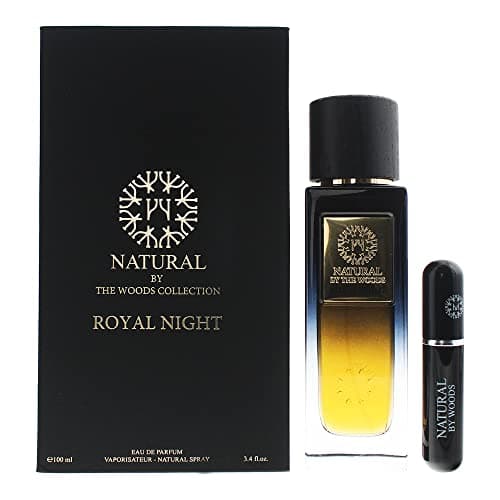
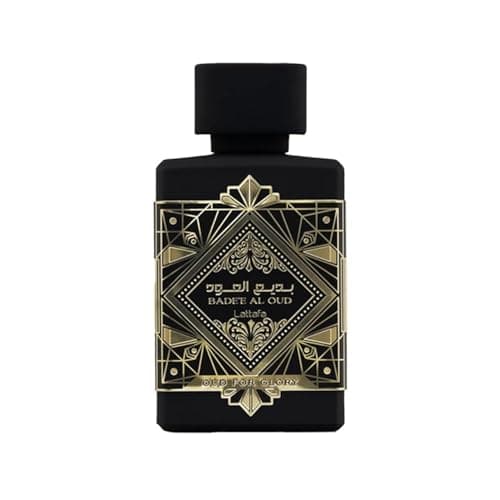
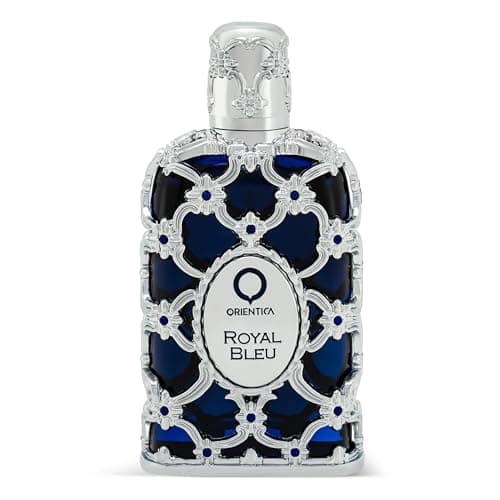
The Woods Collection Royal Night is the genuine niche entry: a small French house, founded in 2015, that sells nothing but fragrance, and the most expensive bottle in our catalog by a wide margin. It is also the only one whose published list contains both birch and incense, which is exactly the kind of composition a house that answers to nobody can ship. Orientica Royal Bleu is the premium end of the Arabian tier — the accord done properly, at a price that still undercuts a department store. Lattafa Oud for Glory is the value end of the same tier, and it outscores both of them on our rubric at a fraction of the money, which is the single most useful fact on this page.
So what should you actually buy?
The practical answer is that tier is the wrong variable to shop on. Decide what job the bottle has to do — daily background wear, cold-weather presence, a specific occasion — then buy the best bottle for that job within your budget, regardless of what kind of house made it. Our five-step guide to choosing a cologne is built around exactly that, and how much to spend on cologne sets out where the money stops buying improvement.
Two specific cases where tier does matter. If you want a fragrance nobody else is wearing, niche is the only tier that delivers it, and the premium is real rather than imagined. And if you want a specific expensive fragrance's smell without its price, you are in dupe territory rather than tier territory — our are cologne dupes worth it guide is honest about what you give up, and the best dupes under $50 is the ranked field.
Two phrases to distrust
"Niche quality." Meaningless. Niche is not a quality grade; there is no body that certifies it, and any brand can use the word.
"Inspired by" and "impression of." These signal a product built to smell like a specific famous fragrance, which is a legitimate thing to sell and not the same as a house with its own identity. We hold a standing line on this: we do not feature replica-label products whose entire catalog is impressions of other brands, and we do feature fragrance-first houses whose bottles happen to resemble expensive ones. Our editorial policy states that rule.