Fragrance Guides · Guides
Fragrance Concentrations: EDC vs EDT vs EDP vs Parfum
The concentration ladder in plain English — what the initials mean, and when to pay up for the stronger version.
Oud & Ember is reader-supported. We earn a commission when you buy through our Amazon links, at no extra cost to you. It never changes our verdict — and we say so when the cheaper bottle is the smarter buy. How this works.
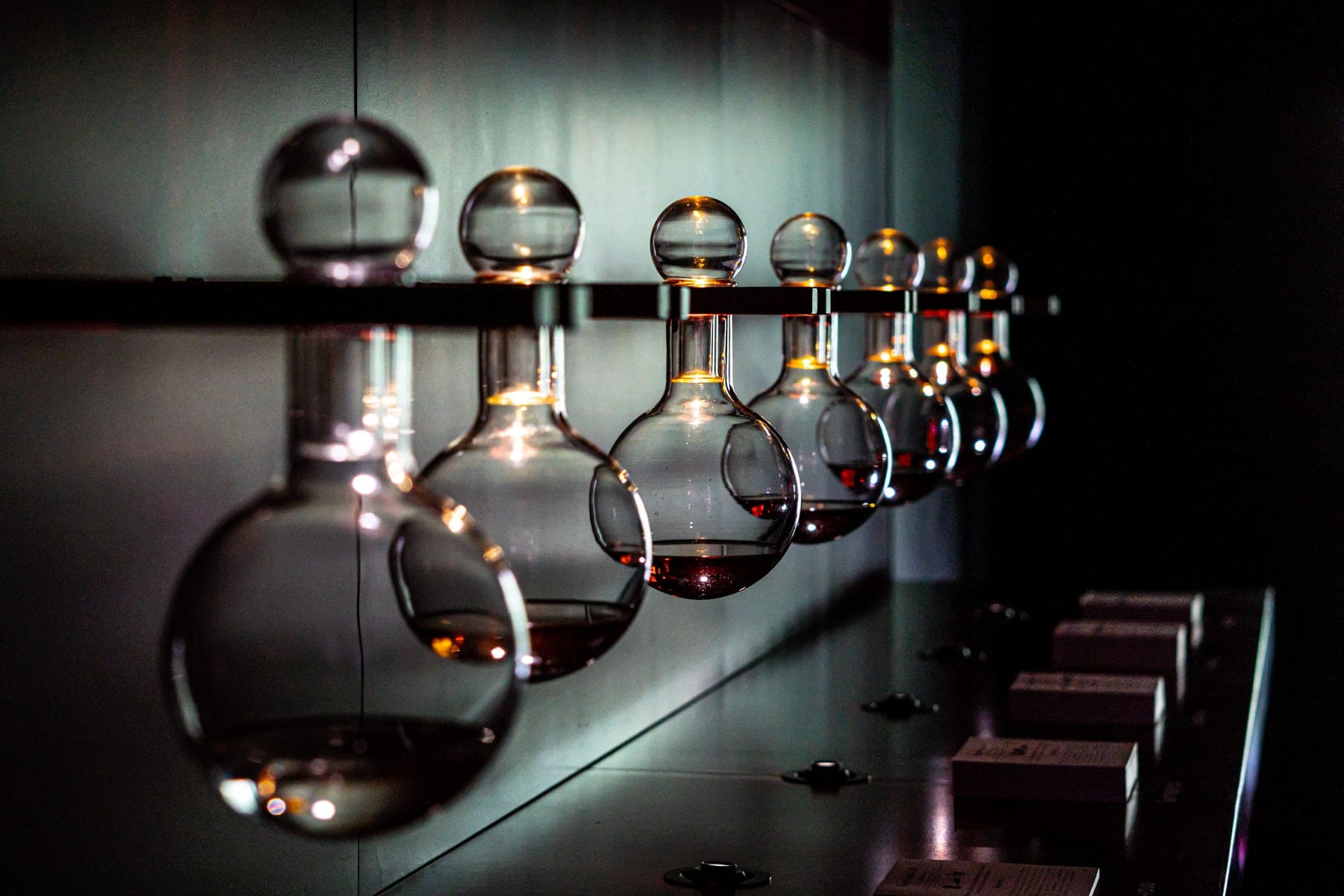
Those little initials on the box — EDC, EDT, EDP, parfum — are the single most misunderstood thing in fragrance, and the good news is they are also the easiest to learn. They all describe one thing: how much perfume oil is dissolved in the liquid. More oil means a richer, longer, stronger scent; less oil means a lighter, fresher, shorter one. That is the whole idea. Here is the ladder, and how to use it to spend your money well.
The concentration ladder, top to bottom
From lightest to strongest, the usual rungs look like this. The oil percentages below are broad industry ranges, not exact promises — houses vary, and the numbers overlap at the edges — but they give you the shape of it.
| Name | Short for | Rough oil | Typical staying power |
|---|---|---|---|
| EDC | Eau de Cologne | ~2 to 5% | A couple of hours; a fresh splash |
| EDT | Eau de Toilette | ~5 to 15% | A few hours; versatile daytime wear |
| EDP | Eau de Parfum | ~15 to 20% | Most of a day; richer and rounder |
| Parfum | Parfum / Extrait | ~20 to 30%+ | The longest; potent, apply lightly |
You will also see elixir, intense, and parfum intenseon modern bottles. These are not a fixed rung on the ladder — they are marketing names a house uses for a higher-concentration or reworked version of a scent. Usually they signal "stronger and longer than the standard EDT," but the only way to know for sure is to smell it.
What the oil percentages actually mean
A fragrance is perfume oil (the aroma materials) dissolved in alcohol, with a little water. The percentage is simply how much of the bottle is that scented oil versus how much is carrier. A higher percentage does not just make a scent "stronger" in a volume sense — it changes the experience. More oil means the heavier base notes are better represented, so the fragrance smells deeper and rounder and the rich dry-down lasts far longer. A lighter concentration pushes the bright top notes forward and lets them fly off quickly, which is exactly what you want from a summer splash.
One myth worth killing right now: a higher percentage does not mean better quality ingredients. Concentration is about how much oil is in the bottle, not how good that oil is. A superbly blended EDT can smell more refined than a clumsy parfum. Keep those two ideas separate and you will never overpay for the wrong reason.
How concentration changes longevity, projection, and price
Three things move together as you climb the ladder. Longevity (how long it lasts on skin) goes up, because there is more oil and more slow-evaporating base material to hang around. Projection and sillage — how far the scent radiates and the trail it leaves — usually go up too, though a light scent can still project hard in the first hour. And price tends to rise with concentration, since you are literally buying more perfume oil per milliliter.
But the relationship is not perfectly linear, and this is where people overspend. Doubling the concentration does not double the hours; it might add a few. And because a stronger scent carries further, you use fewer sprays, so a small bottle of parfum can outlast a big bottle of EDT in real-world use. Think in terms of the job you need done, not just the number on the box.
When the pricier EDP is worth it
Reach for the eau de parfum (or higher) when staying power and depth are the point. If you want a scent that is still there when you get home, a warm cozy fragrance for cold weather, or something for an evening or a special occasion where you want a rich, enveloping presence, the extra oil earns its keep. This is why so many of the best amber and oud scents come as EDP or parfum — the whole appeal of that warm, resinous style is the long, slow, glowing dry-down, and a light concentration cannot deliver it. If that world appeals to you, our best amber fragrances lean exactly this way.
It is also the smarter buy when you would otherwise be re-spraying a weak scent all day. Paying once for an EDP that lasts can be cheaper over time than burning through an EDT you have to top up at lunch — and it saves you the ritual. If long wear is your priority, our longest-lasting colognes rounds up the bottles that genuinely go the distance.
When the EDT is the smarter buy
Do not let anyone talk you into always buying up. The EDT is the smarter choice more often than fragrance forums admit. In hot weather, a lighter concentration is a feature, not a compromise — heat amplifies a scent, and a heavy EDP that is lovely in December can become a headache in July. For the office or any close-quarters setting, a moderate EDT that sits politely against the skin is exactly right, where a booming parfum is antisocial. And for a fresh, clean, citrusy style, the lighter concentration simply smells better — you want those bright top notes, not a thick base.
There is a value angle too. An EDT usually costs less, and if you are still figuring out what you like, spending less per bottle lets you explore more scents. Many people are happier with three well-chosen EDTs than one expensive parfum they wear out of guilt.
Concentration is intensity, not quality
If you remember one line from this guide, make it that one. The concentration tells you how strong and how long, not how good. Match the strength to the job — light for heat and the office, rich for cold weather and evenings — and judge quality separately, by whether the scent actually smells great on you. Once the initials stop intimidating you, you can shop by what matters. When you are ready, take this straight to our sample sets and try a few concentrations on your own skin before you commit to a full bottle.
The label on the box is not the only word that misleads. Our guide to fragrance flankers covers why "Intense", "Noir" and "Exclusif" usually signal a different composition rather than a stronger one, and what is ambroxan explains why concentration stopped predicting longevity in the first place.
Questions
Frequently asked
What is the difference between EDT and EDP?
Does a higher concentration mean better quality?
Is parfum always the best choice?
What does EDC (eau de cologne) mean on a label?
What are elixir and intense versions?
Should I buy an EDP to make my fragrance last longer?
Keep reading
Related
- Perfume oil vs cologneAttars and oils against alcohol sprays, and how differently they wear.
- Longest-lasting colognesThe bottles that genuinely go the distance.
- Make cologne last longerGet more hours out of the bottle you own.
- Fragrance notes explainedTop, heart and base notes - the other half of reading a fragrance.
- Best amber fragrancesWhere a richer concentration really pays off.
More in Guides
Receipts
Sources
- Perfume — concentrations and classification — Wikipedia
- Fragrance basics & concentration terms — Bespoke Unit
- Fragrantica — community fragrance database
We do not run a testing lab, and we do not pretend to. Our scores are judgments from compiled research — published notes and concentration data, plus aggregated owner and community reports — and first-hand impressions only where genuine. Where we could not verify something, we say so rather than quietly leaving it out. Read our full method.