Skip to content
OudEmber

Fragrance Guides · Guides

Fragrance Families Explained

Five families cover almost everything you will ever be handed at a counter. Learn them once and you can predict whether you will like a bottle before you smell it.

By Stephen V.Reviewed How we research
#ad

Oud & Ember is reader-supported. We earn a commission when you buy through our Amazon links, at no extra cost to you. It never changes our verdict — and we say so when the cheaper bottle is the smarter buy. How this works.

Fragrance Families Explained

A fragrance family is a grouping of scents that share a dominant character - fresh, woody, amber, gourmand, floral - and learning the five of them is the single highest-leverage hour you can spend in this hobby. Not because the labels are precise (they are not), but because once you know which family you like, you can walk past ninety percent of a shop without opening anything. The shortcut below is the whole system, followed by one affordable bottle per family so you can learn each one on skin instead of on a chart.

A warning first, because it saves confusion later: families are a map, not a law. Houses invent their own labels, the industry has at least three competing classification schemes, and plenty of real fragrances sit in two families at once - which is why you will see the same bottle filed as "woody amber" in one place and "oriental" in another. The map is still worth having. It just has soft borders.

Families are not the same thing as notes

People mix these up constantly, and the distinction is simple. A note is one smell you can pick out - bergamot, cinnamon, cedar. A family is the overall impression the notes add up to. Bergamot appears in fresh fragrances and in heavy ambers; what decides the family is which notes dominate and how they are arranged. If the note-level mechanics are what you are after, that is fragrance notes explained - read that one second.

The five families, in plain English

1. Fresh

Citrus, aquatic, green and aromatic scents. Lemon, bergamot, sea salt, mint, cut grass, lavender. This is the family nearly every mainstream "blue bottle" belongs to, and it is the safest family in existence: it reads as clean, it works in heat, and almost nobody objects to it. The trade-off is that fresh fragrances are the hardest to be remembered for, and they tend to be the shortest-lived because the citrus and aquatic materials are light and evaporate fast.

Wear it when:it is warm, you are at work, or you want to smell clean rather than noticed. The site's fresh picks live on best summer colognes and best office colognes.

2. Woody

Sandalwood, cedar, vetiver, patchouli, and at the deep end agarwood - oud. Dry rather than sweet, warm rather than bright. Woody fragrances are the ones most often described as "grown-up" or "expensive-smelling," partly because the materials are genuinely costly and partly because they are rare on a drugstore shelf. They last well, because wood molecules are heavy.

Wear it when: the weather is cool, the setting is formal, or you want a fragrance nobody else in the room is wearing. Start at best woody colognes, and if oud is the part that interests you, what is oud is the pillar page for it.

3. Amber

Historically filed as "oriental," a term the industry is steadily retiring in favour of amber. Resins, balsams, labdanum, benzoin, vanilla, spices and incense. Warm, dense, sweet-but-not-edible, and the most characteristically Middle Eastern of the five - which is why most of this site sits in it. Amber fragrances are usually the longest-lasting things you can buy.

Wear it when: it is cold, it is evening, or both. What is amber goes deeper, and best amber fragrances is the ranking.

4. Gourmand

The newest of the five and the one with the sharpest boundary: a gourmand is built to smell like something edible. Vanilla, caramel, praline, coffee, chocolate, honey, boozy accords, dried fruit. Gourmands are extremely effective at getting compliments and extremely easy to over-apply, because sweetness expands in heat far more aggressively than fresh notes do.

Wear it when: it is cold and you are not in a small shared room. Best sweet colognes and best vanilla colognes are the two rankings for it.

5. Floral

Rose, jasmine, orange blossom, violet, iris. The largest family in perfumery overall and the smallest in men's fragrance specifically - but not absent, and the two places it shows up are worth knowing. First as a supporting note: violet leaf and orange blossom appear in a great many fresh masculine fragrances without anyone calling them floral. Second, and much more interestingly for this site, as rose paired with oud, which is one of the defining accords of Middle Eastern perfumery and reads as rich and spicy rather than pretty. That is best rose oud fragrances.

How to use the map when you are actually shopping

  • Identify the family of anything you have ever liked. One bottle you enjoyed is worth more than any quiz. Look up its notes, decide which family dominates, and shop that family first.
  • Expect to own two or three families, not one.Fresh for warm weather and work, plus amber or gourmand for cold weather and evenings, covers most people's entire year. That is the core argument of building a fragrance wardrobe.
  • Use the family to predict the behaviour, not just the smell. Fresh fades fastest. Amber lasts longest. Gourmand gets loudest in heat. Woody is the most formal. Those four facts resolve most "why did my fragrance disappear" questions before they get asked.
  • Do not trust a family label to tell you whether you will like a bottle. It narrows the field; it does not make the decision. Skin chemistry still moves the result - that is why cologne smells different on everyone.

One bottle per family, to learn them on

These four are not ranked against each other - they are one clear example of a family each, and they are all cheap enough to buy as an education rather than a commitment. They appear below in our standard rubric order, which is a performance ranking and says nothing about which family you should prefer. Floral is deliberately represented through the rose-oud route rather than a standalone floral, because that is the form it actually takes in this corner of the market.

One family is worth a footnote here because it breaks the rules above: almond is not one note but two unrelated materials sharing a name, and they sit in different families despite being printed identically on note lists. Our almond colognes page works through that split, which is the single most common reason people dislike a bottle they thought they had chosen correctly.

The short answer

Quick picks

#ad · Live prices from the Amazon Product API, as of October 18, 2026. Where we have no verified live price, we show none — we would rather leave a gap than print a number that has rotted.

In detail

The picks, in full

01
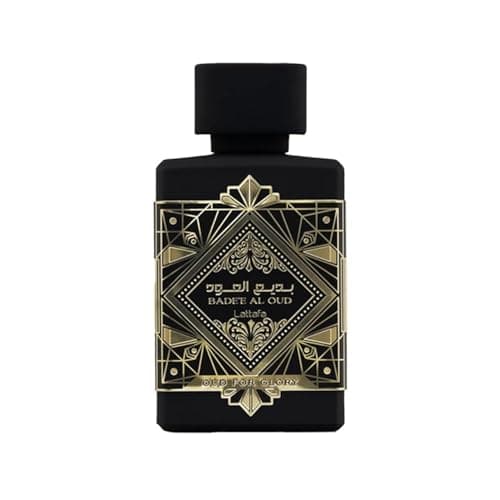
Lattafa Lattafa Oud for Glory (Bade'e Al Oud)

Your first real oud, without the niche price

Lattafa Oud for Glory (Bade'e Al Oud)

Woody / OudEDPStrong longevityFall & winter
8.2/10

The bottle we hand almost everyone who says they want to 'try oud.' It's a smoky, resinous agarwood softened with saffron and a touch of sweetness — the widely-worn, easy-to-love face of oud rather than the sharp, medicinal real thing. Owners line it up against Initio Oud for Greatness, and for pocket change it gets you most of that dark, glowing, cold-weather vibe.

Longevity
9
Sillage
8
Projection
8
Value
10
Versatility
6

Pros

  • Accessible, non-medicinal oud — smoky and sweet rather than barnyard
  • 8+ hour longevity and confident projection by owner consensus
  • Reads far more expensive than it costs; the standard 'starter oud'

Cons

  • Not a rugged, animalic 'real oud' — it's the polished, crowd-friendly version
  • Too heavy and dark for hot weather or a small office

Don't buy this if…

…you want a raw, funky, traditional oud — this is the smooth, sweetened interpretation most beginners actually enjoy.

$21.09View on Amazon

$24.9916% off

Price as of October 18, 2026. Prices change — Amazon's is the one that counts.

#ad · we may earn a commission from this link to Lattafa Oud for Glory (Bade'e Al Oud)

02
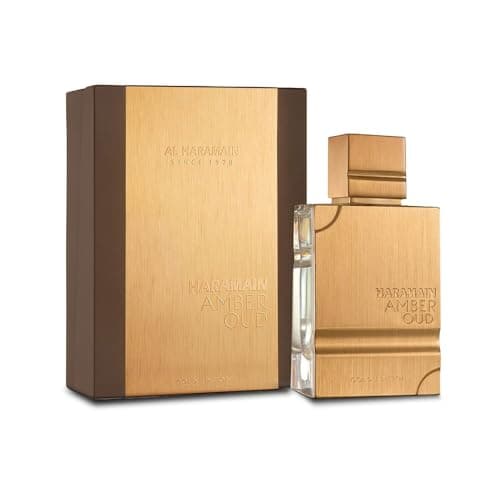
Al Haramain Al Haramain Amber Oud Gold Edition

A sweet, niche-style amber for cold weather

Al Haramain Amber Oud Gold Edition

Amber / FruityEDPLong-lastingCooler weather
8.2/10

The bottle that launched a thousand 'affordable niche' recommendations — a sweet, juicy fruity-amber that owners repeatedly hold up as a budget stand-in for very expensive designer-niche fruity scents. It's syrupy, warm and long-lasting: a beginner's first taste of 'niche-style' richness without the niche receipt.

Longevity
9
Sillage
8
Projection
8
Value
10
Versatility
6

Pros

  • Sweet fruity-amber that reads noticeably expensive
  • Excellent longevity — an all-day, into-the-evening scent
  • One of the best value-per-spray bottles in the affordable-amber lane

Cons

  • Sweet and a touch synthetic if you over-apply
  • Divides opinion on refinement

Don't buy this if…

…you dislike sweet fragrances or want something crisp, dry, or office-quiet.

$37.99View on Amazon

$49.9924% off

Price as of October 18, 2026. Prices change — Amazon's is the one that counts.

#ad · we may earn a commission from this link to Al Haramain Amber Oud Gold Edition

03
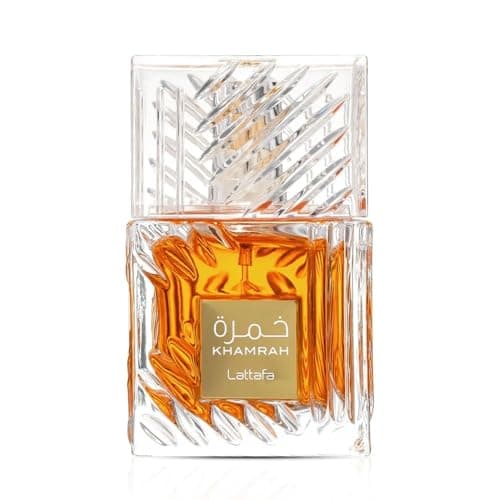
Lattafa Lattafa Khamrah

A cold-weather compliment machine on a budget

Lattafa Khamrah

Gourmand / AmberEDPAll-day longevityFall & winter
8.2/10

The one that went genuinely viral, and deservedly. A spiced-vanilla gourmand — cinnamon, dates, a boozy warmth and a whisper of oud — that smells far more expensive than it costs and lasts the whole day. Owners repeatedly compare it to pricey boozy-vanilla niche scents like Kilian's Angels' Share. Sweet and heavy, so it wants cold weather.

Longevity
9
Sillage
8
Projection
8
Value
10
Versatility
6

Pros

  • Rich cinnamon-date-vanilla accord that reads premium
  • 10+ hour longevity by owner reports; strong sillage
  • Unisex, widely complimented, and endlessly re-bought

Cons

  • Too sweet and heavy for hot weather or a small office
  • Can turn cloying if over-applied

Don't buy this if…

…you dislike sweet gourmands or need something discreet and office-safe.

$33.99View on Amazon

Price as of October 18, 2026. Prices change — Amazon's is the one that counts.

#ad · we may earn a commission from this link to Lattafa Khamrah

04
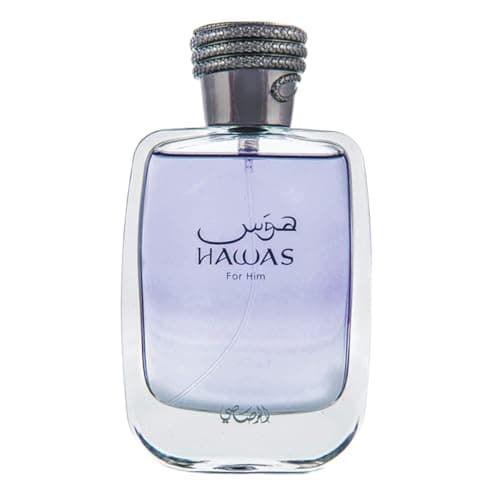
Rasasi Rasasi Hawas For Him

A fresh scent that actually lasts all day

Rasasi Hawas For Him

Fresh / Fruity AquaticEDPStrong longevitySpring & summer
8.0/10

A fresh, fruity, slightly sweet aquatic that hugely over-delivers on performance — owner reports of all-day longevity are common, which most cheap fresh scents can't touch. It sits in the popular 'fruity-fresh with power' lane and is frequently recommended as the versatile crowd-pleaser to own if you can only own one fresh scent.

Longevity
8
Sillage
7
Projection
7
Value
9
Versatility
9

Pros

  • Fresh-fruity and highly versatile
  • Rare all-day longevity for a fresh scent
  • Great value

Cons

  • The fresh-aquatic shape is familiar
  • Sweetness won't suit everyone

Don't buy this if…

…you want something dark, woody, or distinctive rather than a versatile crowd-pleaser.

$32.00View on Amazon

$44.0027% off

Price as of October 18, 2026. Prices change — Amazon's is the one that counts.

#ad · we may earn a commission from this link to Rasasi Hawas For Him

Why the family names keep changing

If you read around, you will meet "oriental," "chypre," "fougere" and "aromatic" as well, and it is worth knowing why those exist without being derailed by them.

  • Oriental is becoming amber. Same family, and the industry has been moving away from the older term for a while. If you see it, read it as amber.
  • Fougere and chypre are structures, not smells. A fougere is built on lavender, coumarin and a mossy base; a chypre on citrus, labdanum and oakmoss. They describe a recipe shape. Most fougeres read as fresh, so you will find them inside the fresh family on any simplified map, this one included.
  • Aromatic means herbs. Rosemary, basil, sage, mint. It is almost always a modifier on fresh rather than a family of its own.

None of that changes the practical advice. Five families, soft borders, and the one you like is the one to shop. If you want the step-by-step version of the whole purchase decision rather than the taxonomy, how to choose a cologne is the framework and this page is the reference it leans on.

How we picked

We do not run a testing lab — and we say so

Our rankings compile published note pyramids and concentration data, aggregate owner and community longevity and sillage reports, and apply a published rubric to every bottle — with first-hand impressions only where they're genuine. The scores are judgments from that research; they are not lab measurements, and we do not claim to have smelled every batch. Formulations change; where a claim came from someone else, we name and link them in Sources.

Questions

Frequently asked

What are the main fragrance families?
For men's fragrance, five cover almost everything: fresh (citrus, aquatic, green, aromatic), woody (sandalwood, cedar, vetiver, oud), amber (resins, vanilla, spices - formerly called oriental), gourmand (built to smell edible) and floral. Longer classification schemes exist and split these further, but five is the number that is actually useful when you are shopping.
What is the difference between a fragrance family and a note?
A note is one individual smell inside the blend - bergamot, cinnamon, cedar. A family is the overall impression all the notes add up to. The same note can appear in several families, so you cannot read the family off one note. Fragrance notes explained covers the note side properly.
Which fragrance family is best for beginners?
Fresh, for one reason: it is the hardest to get wrong. It works in most weather, it is appropriate in almost every setting, and it is the least likely to be disliked by anyone around you. The trade is that it is also the least memorable. Best colognes for beginners is built on exactly that logic.
Is oriental the same as amber?
Yes - amber is the current term for what older references call oriental. The family is resins, balsams, vanilla, spices and incense, and the rename is a deliberate industry move away from the older word. Nothing about the smell changed.
Can a fragrance belong to two families?
Very often, and most interesting ones do. A woody amber, a fresh spicy amber, a gourmand amber - these are all real and common descriptions. Treat the family as the dominant character rather than a single slot, which is why most listings on this site give two words rather than one.
How do I find out which family I like?
Work backwards from something you have already enjoyed - a fragrance, a candle, even a soap - and look up what is in it. Failing that, buy a sample set that spans several families and wear each for a full day. A family you like on paper and dislike on skin is a common and useful discovery.

Keep reading

More in Guides

Receipts

Sources

We do not run a testing lab, and we do not pretend to. Our scores are judgments from compiled research — published notes and concentration data, plus aggregated owner and community reports — and first-hand impressions only where genuine. Where we could not verify something, we say so rather than quietly leaving it out. Read our full method.