Almond has quietly become one of the most worn notes in affordable men's fragrance, and the reason people keep buying the wrong bottle is that "almond" describes two materials that smell nothing like each other. One is cool, powdery, slightly metallic and faintly medicinal. The other is warm, toasted, sugary and closer to dessert. Both get printed on note lists as almond. If you buy one expecting the other, you will not like it — and nothing about the price or the brand will have been the problem.
So this page sorts the catalog by which almond you are actually getting. Five bottles, all of them cheap, all of them currently purchasable, each one placed on the right side of the line.
The two almonds, and how to tell which one you want
Bitter almond, marzipan, heliotrope.This is the almond of amaretto and old-fashioned almond extract. In perfumery it usually arrives alongside heliotrope, which is a powdery floral that smells like almond and vanilla had a baby, and very often with a little cumin to keep it from going saccharine. The result reads cool rather than warm, powdery rather than sticky, and "expensive barbershop" rather than "bakery". People who love this almond talk about how clean and grown-up it is. People who hate it say it smells like hand cream or like a dentist.
Candied almond, praline, toasted nut. This is the almond of nougat, of praline, of a nut roasted with sugar. It almost always sits with vanilla, cinnamon and tonka in a full gourmand structure, and the almond is a texture inside something sweet rather than the subject of the fragrance. People who love this one wear it in cold weather and get told they smell good. People who hate it find it cloying after an hour.
The quickest way to work out which camp you are in: think about amaretto versus nougat. If amaretto appeals, you want the first group. If nougat appeals, you want the second. They are not adjacent preferences, and almost no one likes both equally.
Why almost every cheap almond fragrance exists
This matters for reading any almond recommendation, including ours. Both halves of this category were created by one expensive fragrance each, and nearly every affordable almond bottle on the market is chasing one of them.
The bitter-almond half traces to Parfums de Marly Althair, which pairs almond and heliotrope with cumin and vanilla and is the reason roughly a dozen near-identical cheap bottles exist. Three of the picks below sit in that lane, and if accuracy to Althair specifically is what you want rather than almond generally, our Althair dupes page ranks them against it note by note.
The praline half traces to Kilian Angels' Share, a cognac-and-praline gourmand that made spiced-vanilla-almond a mainstream men's direction. Two picks below sit in that lane, and our Angels' Share page does the same accuracy job there.
Neither of those bottles is cheap and neither is linked anywhere on this site. They are named here because you will see the product descriptions below refer to "the reference" and "the original", and now you know which one each pick means. This page is not ranking accuracy to either of them. It is ranking which bottle best delivers a particular shape of almond.
How these five were chosen
The criterion is deliberately boring and you can check it yourself: the house has to publish almond or praline in the note list.Not a reviewer saying they get almond. Not a marketing blurb calling something "nutty". The brand's own pyramid has to name the material. Six bottles in our catalog clear that bar and five of them are ranked below.
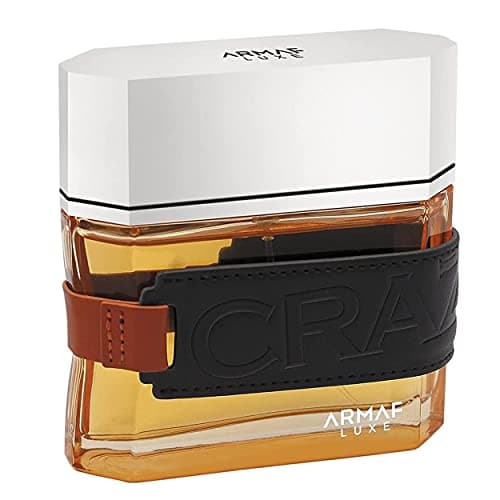
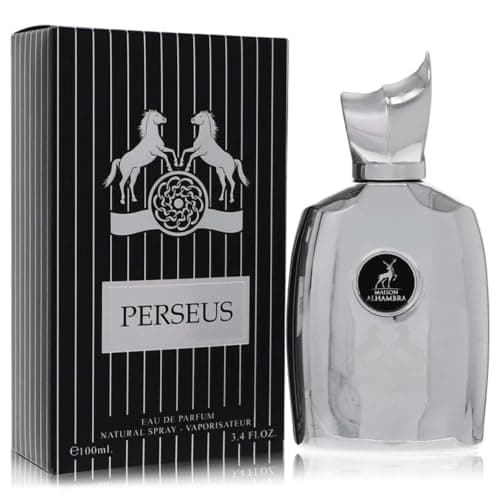
Rank is fit to the question, not raw rubric score — which is worth saying because four of these five score within a few tenths of each other overall. Perseus is first because it is the clearest, most literal example of the bitter-almond accord, not because it won on points. Craze is last on a page where it is also the cheapest, because its opening is the roughest of the five and a bad first ten minutes puts people off a bottle for good.
A note on the one we left out. Jo Milano Raees Blanche meets the criterion — the house publishes heliotrope, cumin, bitter almond, lavender, jasmine, vanilla, sandalwood and amber, which is the same pyramid as our top pick — and it is deliberately not ranked here. It sells for roughly double the Arabian picks for an identical published note list and far less owner feedback. That is a worse buy, not a fifth opinion. It is a reasonable bottle and we cover it on the Althair page; it just does not earn a slot on a page about getting this accord cheaply.
Reading the picks
Three of the five are in the bitter-almond camp: Perseus, Detour Noir Intense and Craze. Two are in the praline camp: Spartacus and Historic Sahara. They are interleaved by how good we think they are rather than grouped, because grouping them would bury the best bottle on the page in the middle of a list. If you already know which camp you are in, skip to the ones named above.
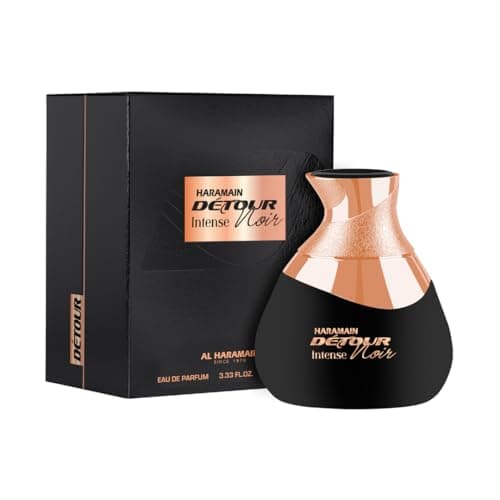
Within the bitter-almond three, the distinctions are real and small. Perseus is the most literal and the sweetest. Detour Noir Intense takes the same almond-heliotrope-vanilla spine and adds cardamom, pink pepper, guaiac and agarwood on top of it, which makes it the driest and most grown-up of the three and the one we would wear to work. Craze is the oldest, cheapest and roughest, with a sage note the others do not have and a synthetic opening you have to wait out.
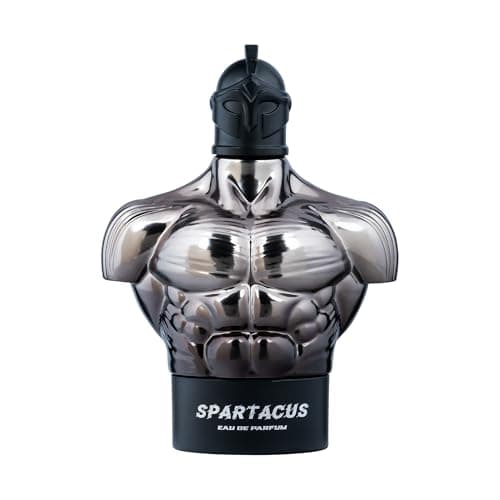
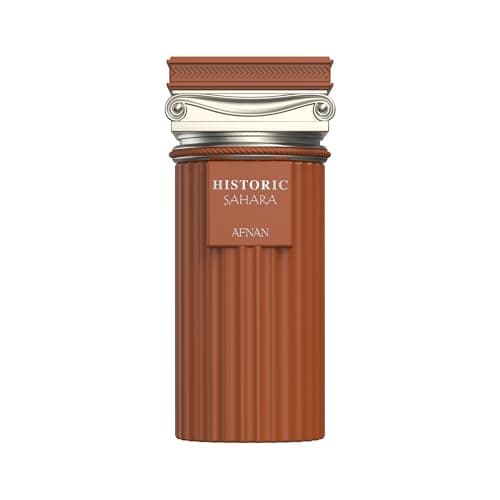
Within the praline two, Spartacus is the big one — an eighteen-note build with candied almond, praline, bourbon vanilla, cinnamon, orange blossom, tonka, benzoin and labdanum, and the largest bottle on the page. Historic Sahara is the tighter, more precise one, at extrait de parfum strength, and it is missing the orange blossom that gives the praline direction its lift. Heavier is not the same as better here; which you prefer depends almost entirely on how much sweetness you can tolerate.
What to expect from any of them
Almond fragrances are cold-weather fragrances.All five of these are listed by us for fall and winter, and that is not laziness. Almond, vanilla and praline all get heavier and sweeter in heat, and heliotrope's powderiness turns into something close to talc on a hot day. If you want one bottle for the whole year, this is the wrong family and our everyday page is a better starting point.
Cumin is the note that decides this for a lot of people. Two of the three bitter-almond picks publish it. In small amounts cumin reads as warm, skin-like and slightly savory, and it is a large part of why Althair-style fragrances smell expensive rather than like dessert. In larger amounts, or on certain skin, it reads as body odor. There is no way to predict which you will get, and it is the single strongest argument for sampling before you commit to a bottle in this family. Our guide to why fragrance smells different on everyone explains the mechanism.
These are loud. Four of the five score 7 or 8 for projection on our scale, and the almond-vanilla accord is naturally room-filling. Two or three sprays is plenty. Owner reports in this family contain more warnings about over-spraying than any other we cover — see how many sprays you actually need.
Performance is genuinely good across the board. Every pick here lands at 8 out of 10 for longevity in our scoring, which is unusual for a five-bottle page at these prices. Heavy amber, vanilla and tonka bases are cheap to build and they last. What the affordable houses have not solved is development over those hours — expect these to say most of what they have to say in the first couple of hours and then hold.
Perseus is the highest-scoring bottle in its house as well as the almond pick here. If you want the rest of that house mapped - including which expensive original each of its four bottles targets - that is the best Maison Alhambra fragrances.
Which one should you buy?
If you do not know which almond you want, buy Perseus. It is the most literal example of the accord that made this category popular, it is cheap enough to be a low-stakes experiment, and if you dislike it you have learned something specific: you are in the praline camp, not the marzipan one.
If you want almond that works in an office, Detour Noir Intense. The cardamom, guaiac and agarwood dry it out and pull it away from the dessert end, and it is the only pick here we would wear to a meeting. Be aware it is a different fragrance from the plain Detour Noir rather than a stronger version of it, which is a genuinely confusing piece of naming.
If you want the sweet, toasted, cold-night version, Spartacus. Biggest bottle, longest note list, most sweetness. It is the one most likely to get you a compliment and the one most likely to be too much in a small room.
If you want the praline direction done with more precision, Historic Sahara, at extrait strength and from the longest-established house on the page. Higher concentration is not the same as closer or better — it means more oil and less alcohol, which mostly buys you a slower opening. Our guide to concentrations goes through what the label commits a house to.
If you want to spend as little as possible, Craze. It has the longest track record of anything here, it performs well above its price, and the first ten minutes are rough. If you can wait those out, it is the value play on the page.
Sample first, in this family more than any other
We do not say this on most roundups. We are saying it here because almond is a polarizing material, cumin is a polarizing material, and two of these five publish both. A sample costs a few dollars and the failure mode is a full bottle of something you will never wear. Our guide to where to buy covers sample and decant sources, and sample sets are the cheapest way to test a direction rather than a single bottle.
If almond turns out not to be for you
The two nearest families are worth knowing about, because people who arrive at almond are usually really after one of them. Vanilla is the warm, sweet, creamy direction without the nutty bitterness — a softer, safer version of what the praline picks here are doing. Sweet colognes is the wider field if what you actually liked was the sugar rather than the nut. And if the powdery, slightly medicinal side of bitter almond is what put you off, that reaction is worth trusting — it does not get better with wear.