Buy Maison Alhambra Perseus.It scores 7.8 on our rubric against Craze's 7.6, and the difference is not composition — it is that Craze's first ten minutes are rough enough to put people off a bottle they would otherwise have liked, and that Perseus is the more wearable of the two.
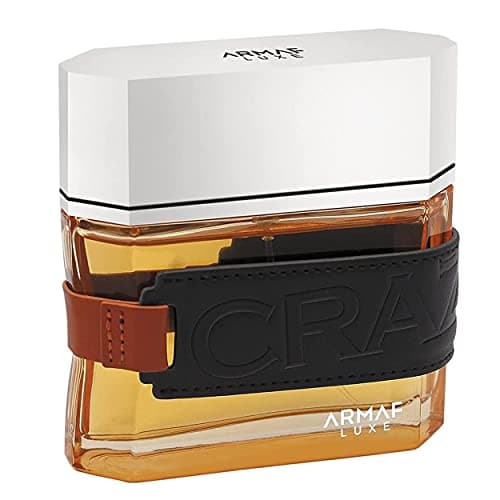
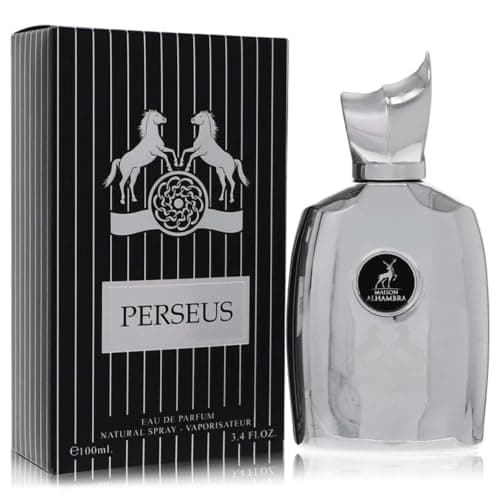
But understand why this page is unusual before you decide: the published note lists are almost identical. Armaf publishes Craze as heliotrope, cumin and bergamot, then bitter almond, lavender, jasmine and sage, over vanilla, amber and sandalwood. Perseus is published as heliotrope, cumin and bergamot, then almond, lavender and jasmine, over vanilla, amber and sandalwood. Craze's list is Perseus's list plus sage. Eight shared materials out of nine.
That almost never happens. Most of the head-to-heads on this site turn on how little two bottles share — we have a page where two fragrances sold under one line name share exactly one published material. Here the notes decide nothing, which is genuinely useful information: it means anyone telling you these two smell meaningfully different is describing execution, not formula, and it means the cheaper one is not a lesser version of the accord. It is the same accord, built less carefully.
The published notes, side by side
| Tier | Maison Alhambra Perseus | Armaf Craze |
|---|
| Top | Heliotrope, cumin, bergamot | Heliotrope, cumin, bergamot |
| Heart | Almond, lavender, jasmine | Bitter almond, lavender, jasmine, sage |
| Base | Vanilla, amber, sandalwood | Vanilla, amber, sandalwood |
| Concentration | Eau de parfum | Eau de parfum |
| Our overall | 7.8 | 7.6 |
One material separates them on paper, and it is sage— a dry, green, slightly medicinal herb. In practice it does roughly what you would expect: Craze reads a touch drier and more herbal in the middle, Perseus reads sweeter and more straightforwardly almond. That is a real difference and it is a small one.
A sourcing distinction you should know about.Craze's list above is Armaf's own, pulled from its storefront. Perseus's is not — Maison Alhambra's website is password-protected and serves no public product pages at all, so there is no brand disclosure to quote. The Perseus list is the database one, which is uncontested across every retailer listing and owner account we could find, but it does not have the same provenance and we are not going to pretend it does. If Maison Alhambra ever opens its storefront we will check it.
What they actually smell like
Both are the same idea: a powdery, metallic bitter-almond accord over a sweet vanilla-amber floor, with cumin doing something divisive in the background. If you have smelled one expensive fragrance in this lane you know the shape.
Perseusgets the distinctive part most right. The metallic bitter-almond opening — the note that reads as amaretto, or as almond extract, or to some people as marzipan — is well executed and arrives cleanly. It then sweetens considerably, more than the reference does, and settles into a powdery vanilla-amber that owners describe at six to nine hours on skin and all day on clothing. What it misses is the creamy, expensive-feeling richness of the dry-down in the fragrance it is chasing. That is where the money went in the original and it is not reproducible at this price.
Crazeis the older bottle — it predates the current clone wave entirely, which is worth something, because it means there is a long owner record rather than six months of first impressions. Its accord is right. Its materials are audibly cheaper. The specific complaint, raised consistently and which we think is fair, is that the first ten minutes are harsh and noticeably synthetic. It settles into something quite close to Perseus, but you have to wait out an opening that a lot of people will not wait out. The sage gives the middle a drier, more herbal, slightly more old-fashioned reading, which some people prefer.
The synthetics doing this kind of work are the reason affordable fragrance exists at all, and they are also the reason a cheap bottle's opening is usually where you notice the price. Our guide to why these fragrances cost so little explains the economics honestly.
Performance: effectively a tie
| Metric (out of 10) | Perseus | Craze |
|---|
| Longevity | 8 | 8 |
| Sillage | 8 | 8 |
| Projection | 8 | 8 |
| Value | 9 | 9 |
| Versatility | 6 | 5 |
| Overall | 7.8 | 7.6 |
Four of five categories are identical, which follows from the compositions being identical. Both are heavy, sweet, powdery fragrances on amber-vanilla bases, and that kind of structure performs well and performs similarly regardless of who built it.
The single point of difference is versatility, and it is the whole decision.Perseus scores 6 and Craze 5. Both are low — these are cold-weather, evening, be-noticed fragrances and neither is an everyday bottle — but Craze is a point worse because the harsh opening plus a louder, drier projection makes it harder to get away with in a small room. Owners of Craze warn about over-spraying more than owners of almost anything else we cover.
On price,Craze is the cheaper of the two and has been for years. That is the entire argument for it, and it is not a bad one if you have smelled the accord and know you like it. We do not quote figures in prose anywhere on this site — the live numbers render above, stamped with the date they were read — but the gap is real and it is in Craze's favor.
Which to buy, by what you actually want
- You have never smelled this accord before. Perseus. A rough first ten minutes is how people decide they hate a whole fragrance family, and you should not risk it on your first bottle.
- You know you like the accord and want it cheapest. Craze. You will wait out the opening because you know what is coming.
- You want the closest reading of the expensive original. Perseus, on the published list and on owner consensus. Neither reproduces the dry-down.
- You want it drier and less sweet. Craze. The sage is the one material that separates them and it pulls in exactly that direction.
- You want a long track record. Craze, comfortably. It has been on the market far longer than almost anything else in this lane.
- You want to wear it to work. Neither. Six and five for versatility are the honest numbers, and our office colognes roundup is the right page instead.
- Cumin bothers you. Neither, and read the next section before you order either of them.
The cumin problem, which applies to both
Both lists carry cumin in the top tier, and this is the single most important thing to know before buying either bottle. Cumin reads as body odor on some people and as warm spice on others, and there is no way to predict which you are from a description. It is the strongest argument for sampling anywhere on this site, and it is why we push testing harder on this family than on any other.
It is also not a flaw in either bottle — the expensive fragrance they are both chasing has cumin in it too, and the note is load-bearing in this accord rather than decorative. But if you have had a bad experience with a cumin-heavy fragrance before, these are both going to do it again. How to test cologne before you buy is the protocol, and why cologne smells different on everyone explains the mechanism.
The third option, if you dislike both
Armaf Spartacus is on this page because there is a good chance the problem is not these two bottles but the camp they belong to.
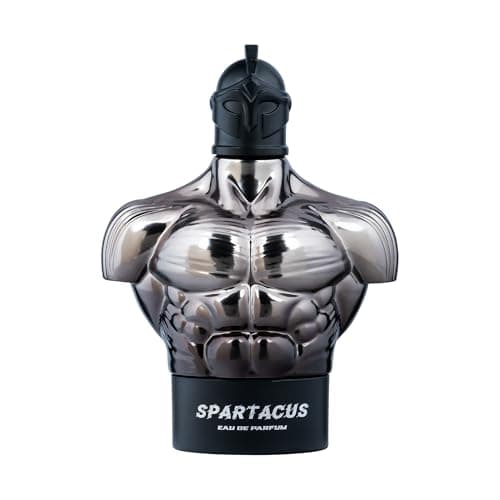
Almond in perfumery is two unrelated materials sharing one word. There is bitter almond — marzipan, amaretto, heliotrope, usually with cumin, reading cool, powdery and slightly medicinal — which is where Perseus and Craze both live. And there is candied almond: praline, nougat, toasted nut, always inside a vanilla-cinnamon-tonka gourmand, where almond is a texture rather than the subject. Spartacus is the second kind, and it is the biggest bottle in the lane with an eighteen-note build including candied almond, praline, bourbon vanilla, cinnamon, orange blossom, tonka, benzoin and labdanum.
The test is: amaretto or nougat? Almost nobody likes both equally. If the descriptions of Perseus and Craze above sound like hand cream or a dentist's office — which is the standard objection to this camp — you want Spartacus and you want it instead of either. We work the whole split through on our best almond colognes roundup, which ranks five bottles across both camps and is the page to read if you are not sure which you are.
Spartacus's own honest cons: it is enormous and sweet, it is a cold-weather bottle only, and it is the least subtle fragrance on this page. It is also not a substitute for the accord Perseus and Craze share — it is a different fragrance that happens to contain almond.
Honest cons on all three
Maison Alhambra Perseus.Sweeter and more vanilla-forward than the fragrance it reads as, and it misses the creamy richness of that dry-down entirely. Longevity is the most disputed thing about it — owner reports range widely, which usually means batch inconsistency, and we score it 8 on the weight of the composition as much as on the reports. It is loud, sweet and powdery, and the cumin makes it polarizing. And its brand publishes nothing about it at all, which is a genuine information gap rather than a smell problem.
Armaf Craze.The opening is the worst ten minutes of any pick on this page — noticeably synthetic, and the reason it is ranked second despite being the cheaper bottle. The dry-down loses the original's richness in the same place Perseus does, only more so. And it is loud enough to be a problem in a small office; the over-spraying warnings from owners are consistent enough that we repeat them.
Armaf Spartacus. It answers a different question than this page asks. It is very sweet, very large and strictly cold-weather, and if what you wanted was the bitter-almond accord it will not give you that at all.
How we sourced this comparison
Craze's note list came from Armaf's own product data, fetched live on 2026-11-03, where the brand describes it as “a clean oriental-fougere… refined soapy elegance” and publishes all nine materials including the sage. That is the best possible source for a composition.
Perseus's list is the database list, and that is a real limitation.maisonalhambra.com is a password-protected storefront — it returns a live page but serves only a password gate — so the house publishes no accessible product information for any of its fragrances. The list we use is uncontested across retailer listings and owner reports, and the accord it describes is the one every owner account we read describes, but it is not a brand disclosure. Where we have brand provenance on this site we say so; where we do not, like here, we say that too.
What we will not claim. We have not smelled these three bottles side by side under controlled conditions, measured anything with instruments, or run a blind panel. Our scores are editorial judgments built from published composition, concentration and aggregated owner reporting, exactly as our methodology pagedescribes. The note comparison at the top of this page is not a judgment at all though — it is two published lists set against each other, and the eight-of-nine overlap is something you can check yourself from the sources below.
If this accord turns out not to be for you, our winter colognes roundup covers the rest of the cold-weather field, and best unisex colognesis the better page if you are shopping for something two people can share — neither bottle here is sold that way.