Rose and oud is the oldest and most important pairing in Middle-Eastern perfumery, and it exists because the two materials fix each other's problems. Oud on its own is austere - dry, medicinal, animalic, genuinely difficult. Rose on its own, in a men's fragrance, risks reading as old-fashioned or simply pretty. Put them together and each one supplies what the other lacks: the rose gives the oud a lift and a sweetness to carry, and the oud gives the rose a dark floor so it never reads as a bouquet.
It is also a pairing the affordable market claims far more often than it delivers. "Rose oud" on a box frequently means a trace of rose in the heart of an amber, or an oud accord with no rose at all. So this page does something most do not: it names only the bottles in our catalog where both notes are genuinely present on the published pyramid, and it tells you that is three. If you want a longer list, other sites will give you one; it will not be an honest one.
What rose oud actually smells like
Not like a rose garden, and not like a hospital. The rose used in this style is usually a jammy, slightly stewed Turkish or Bulgarian rose rather than a fresh dewy one, and the oud in an affordable bottle is an oud accord - a reconstruction built from woody and resinous synthetics - rather than distilled agarwood oil, which costs more per gram than most bottles cost outright. Our explainer on what oud actually is covers that distinction properly, and it matters here: at this price you are buying the shape of the accord, not the raw material.
The combination usually reads as warm, slightly sweet, a little smoky and distinctly formal. It is the most obviously "Middle-Eastern" smelling category this site covers, and it is also the one most likely to be mistaken for something expensive.
How we ranked them
- Are both notes really there? Published pyramid first. A bottle where the rose is decorative did not make the page at all.
- Which note leads? The three bottles below sit in different places on that spectrum, and which one suits you depends entirely on whether you want the flower or the wood in front.
- How approachable is it? This is a category people bounce off. The easier entry point ranks first even though it is not the most complex bottle here.
- Value and availability, on the same terms as every roundup on this site.
Notes on the picks
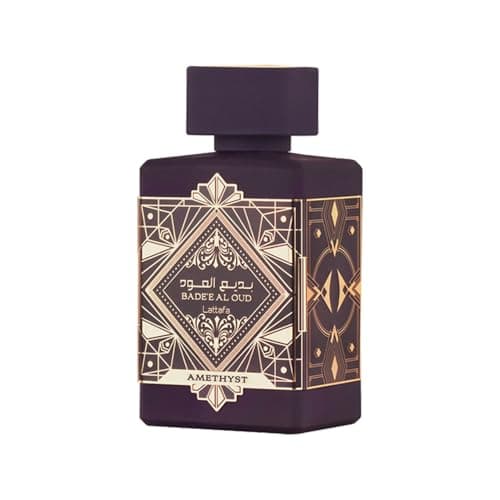
Lattafa Bade'e Al Oud Amethyst ranks first as the entry point rather than as the most impressive bottle. Its pink pepper and bergamot open onto Turkish and Bulgarian rose, then oud, amber and vanilla - the rose is unmistakably the lead and the oud sits underneath as warmth rather than as smoke. That makes it the easiest way into the category by a distance. The honest cost is that it is also the tamest: sweet and floral enough to read more perfume-shop than niche, and it carries no saffron and no real smokiness.
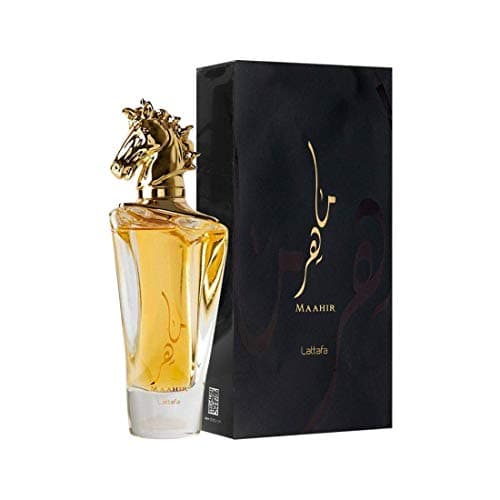
Lattafa Maahir is the balanced middle and, for most people who already know they like the style, the better bottle. Saffron and rose over akigalawood, leather and a dry amber-oud base gives it the leathery, slightly austere quality the first pick deliberately avoids. Two things to know: there is no fruit in it, so it is drier than the Amethyst, and the vanilla-musk base softens the ending more than a traditional rose oud would. Note also that Maahir is not Maahir Legacy - the latter is a mint-and-lavender fresh fragrance and a completely different purchase, which our guide to flankers covers.
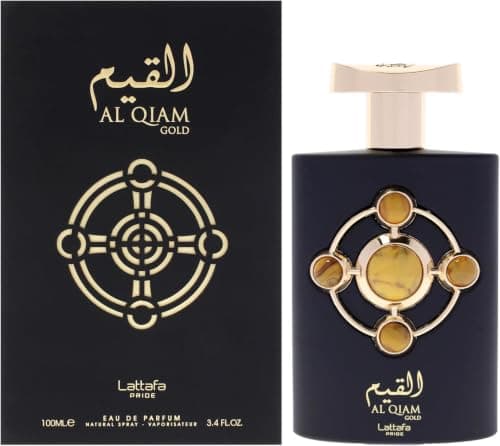
Lattafa Al Qiam Gold is the darkest and fruitiest of the three - raspberry and saffron over leather and patchouli, onto oud, amber, benzoin and guaiac wood. The rose is the quietest here and the resin is the loudest, so it is the pick for someone who wants oud in front with a floral lift behind rather than the reverse. It has no incense or birch, so the tarry, smoky edge of the expensive fragrances in this style is not there - we make that point at length on our Ombre Nomade page, where this bottle leads.
If none of the three is quite right, the two adjacent pages are affordable oud colognes for the wood without the flower, and best amber fragrances for the warmth without either.
Why the affordable rose oud shelf is so small
Two reasons, and both are worth knowing before you shop.
The first is that rose is expensive. Rose absolute and rose oil are among the costliest naturals in perfumery, and while there are perfectly good rose synthetics, a convincing jammy rose accord still takes more materials and more work than a generic woody-amber does. It is far cheaper for a house to put oud on the box and skip the flower.
The second is that rose reads as feminine to a large part of the US market in a way it does not in the Gulf, where rose oud is worn by everyone. Houses building for export therefore tend to dial the rose down and the sweetness up, which is exactly what has happened to the first pick on this page. That is not a criticism of the bottle - it is the most approachable one here precisely because of it - but it explains why the category looks thinner from the US than it actually is.
How to wear rose oud
- One or two sprays, never more. These are dense, resinous fragrances with real projection. Our spray-count guide covers the general rule; this category sits at the conservative end of it.
- Cold weather and evenings. Resin and amber expand in heat. These are fall and winter fragrances.
- Formal over casual. Rose oud reads dressed-up. It sits oddly against a t-shirt and very well against a jacket.
- Give it twenty minutes before you judge it. The opening of a rose-oud fragrance is the least representative part - the first few minutes are usually sharp and a little medicinal, and the accord does not resolve until the heart arrives.
Is rose oud a good first oud?
Often yes, and that is a slightly unusual answer. The conventional route into agarwood is a sweet, polished woody oud - which is what our best oud for beginners page recommends. But rose oud has a real advantage for a newcomer: the rose gives your nose something familiar to hold onto while the oud does the unfamiliar part. Several people who bounce off a straight oud get on fine with a rose one.
The exception is if rose itself is the problem for you. If you already know you dislike rose in fragrance, no amount of oud underneath will fix that, and you should start with the affordable oud roundup instead. And if you are not sure whether what you dislike is the rose or the oud, a sample set costs a fraction of a wrong bottle.