No house on earth is cloned as consistently, or as competently, as Parfums de Marly. Creed gets copied more often, but badly; Tom Ford gets copied selectively. Marly gets copied well, across its whole men's range, usually within a year or two of a release — and this page exists to explain why that happens, which bottles are actually worth your money, and where even the best of them still fall short. Six picks, four fragrances, one set of criteria applied to all of them.
Why Marly clones so well
It is worth understanding the mechanism, because it tells you what to expect before you spend anything.
Marly's men's range is built almost entirely out of modern, inexpensive, widely available materials: apple and pear esters, lavender and geranium accords, ionones for the violet, vanillin, coumarin, synthetic ambers such as ambroxan, guaiac wood, cashmeran. There is no restricted natural doing load-bearing work — no real oakmoss holding the structure together, no birch tar, no oud, no costly incense resin. Compare that with the fragrances on our Ombre Nomade and Green Irish Tweed pages, both of which fail cheaply because one expensive material is the whole point. Take that constraint away and a competent house with a good lab can get very close for very little.
The second half of the explanation is commercial. Marly prices its bottles at the top of the designer market while composing in a style the affordable Arabian houses — Lattafa, Armaf, Al Haramain, Afnan, Maison Alhambra, Orientica — already work in. The gap between what the juice plausibly costs and what the bottle sells for is the largest in mainstream fragrance, and that gap is precisely what a clone monetizes. Our explainer on why Arabian colognes are so cheap works through where the savings genuinely come from and where they do not.
How we ranked six bottles across four fragrances
Ranking across different originals is harder than ranking within one, so the criteria are stated up front and applied identically. In order of weight:
- Does the published note list track, tier for tier?Not "does it share four notes" — does the top read like the top and the base like the base. A bottle that borrows the dry-down and invents the opening is a different fragrance wearing a familiar coat.
- Is the accord clonable in the first place? Some of these fragrances are structurally easy to copy and some are not, and that changes how much credit a near-miss deserves. We say which is which for each.
- What does it cost, per bottle and per milliliter? The single most common way to overpay in this category is an 80 ml bottle priced like a 100 ml one.
- Is there an ownership record? A bottle with years of consistent owner reports is a safer purchase than one with a perfect pyramid and nothing behind it.
- Can you re-buy it? A listing down to its last few units is a worse recommendation than a slightly less accurate bottle you can order again in March.
What we do not do is claim percentages. We do not run a lab, we have no gas chromatograph, and any list telling you a bottle is an "87% match" is telling you something nobody can measure. Our closeness calls are considered editorial judgments compiled from both fragrances' published note pyramids, their concentration data and aggregated owner reporting — our methodology page spells out exactly what that does and does not mean.
The finding: Marly publishes two different pyramids, every time
This site has now built a page around four Marly fragrances, and the same thing has happened on all four. The brand's own product page publishes a short, tidy note list. The fragrance databases publish a longer one. They do not agree.
On Layton the brand lists praline and puts cardamom on top; the databases omit the praline, move cardamom to the base and name the synthetic amber. On Pegasus the two lists share almost nothing beyond bergamot, almond, vanilla and sandalwood. On Althair one list carries mandarin and the other does not. And Sedley, checked for this page, does it again: Parfums de Marly currently gives bergamot, spearmint and orange, then geranium, lavandin and pine, over sandalwood, ambrox and white musks — while the databases and the retailers reprinting them give bergamot, spearmint and a watery accord, then geranium, lavender and a solar note, over sandalwood, incense, white musk and cedarwood. Pine and orange on one; incense, cedar and water on the other.
We are not going to tell you which is right, because we do not know and neither does anyone publishing a percentage. Reformulation, marketing simplification and database inheritance are all plausible and we have no way to separate them. What we do instead is judge every candidate against bothlists and say which one it tracks. If you take one thing from this page, make it this: a clone marketed as matching "the" note pyramid is matching a list, and there are two.
The picks
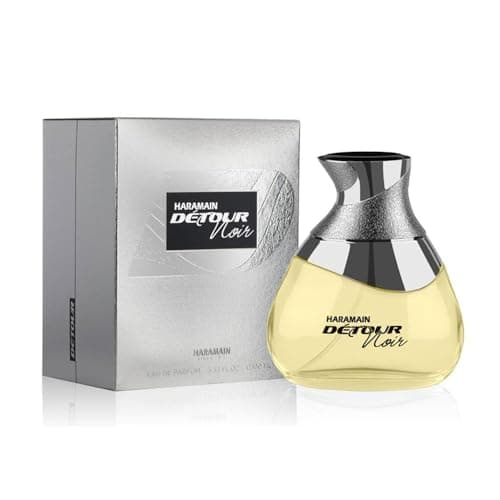
Al Haramain Detour Noir — the best Marly alternative overall
Detour Noir chases Layton, and Layton is the Marly that clones best. Al Haramain's own US product page publishes apple, lavender, violet and jasmine, then vanilla, patchouli, mandarin and bergamot, over cardamom, geranium, sandalwood, pepper and guaiac wood — the apple-lavender-vanilla spine intact, with the cardamom and guaiac the original leans on.
It wins the page on the combination the criteria reward: the accord is genuinely copyable, the note list tracks, the bottle is the cheapest thing here by a clear margin, and it has been on sale long enough that owner reports converge rather than scatter — eight hours and more, with heavy projection, is the common account. It is sold in a 3.33 oz bottle rather than 3.4, which is trivial but worth knowing.
The honest cost is refinement. Against the original it is louder and less blended, and it gets there faster — the original takes its time arriving and this does not. Skip it if you want the slow, expensive-feeling unfolding rather than the accord itself.
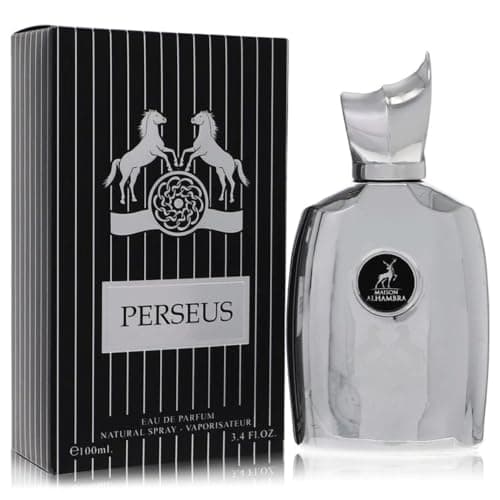
Maison Alhambra Perseus — the closest published match on the page
Perseus chases Pegasus, and it reproduces the database reference list essentially note for note: heliotrope, cumin and bergamot, then almond, lavender and jasmine, over vanilla, amber and sandalwood. It has been out long enough to have a real owner record, unlike most of this field, and it is priced at the bottom of the range.
Two warnings, both real. The first is cumin — it sits in the top notes of this accord, a meaningful minority of people read that material as body odor, and almost every competing dupe list omits it entirely. Our full Pegasus pagegives it a section of its own because it is the single best argument for sampling before you buy. The second is that the dry-down is where these copies lose: the bitter-almond and heliotrope opening is cheap and unmistakable, so the first hour is convincing, while the original's blended sandalwood-musk-vanilla ending is the expensive part and the copies reach for vanillin instead.
Skip it if cumin is a known problem for you, or if what you liked about the original was the last three hours rather than the first one.
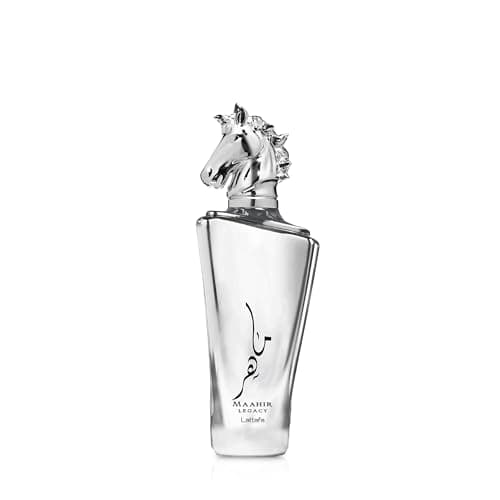
Lattafa Maahir Legacy — the affordable Sedley, and the value pick of the page
This is the bottle that made this page possible. A standalone Sedley roundup has been researched twice on this site and dropped twice, because only two defensible bottles exist and two picks is not a roundup — so here are both, ranked against everything else rather than padded out with bottles that fail.
Lattafa publishes lime, grapefruit, lavender, spearmint and pineapple, then juniper berry, rosemary, olibanum resinoid, geranium and black pepper, over vetiver, cashmeran, Ambrox, oak moss and tonka bean. Set that against the reference and five things line up directly — spearmint, lavender, geranium, incense and Ambrox, the last of which the brand names using the same word Marly does. It comes from the largest house in this segment, it is priced near the bottom of the page, and it holds up in heat, which matters for an accord people buy for summer.
What it is not is quiet. The pineapple, juniper, rosemary and oak moss make it busier and greener than the original, and there is no sandalwood, so it misses the soft woody floor the reference lands on. One more practical warning: Maahir Legacy is not Maahir. Plain Lattafa Maahir is a saffron-rose-oud amber we rank on an entirely different page, and the two names sit next to each other in search results.
Skip it ifyou want the original's airy, almost transparent finish. This is denser and more obviously aromatic.
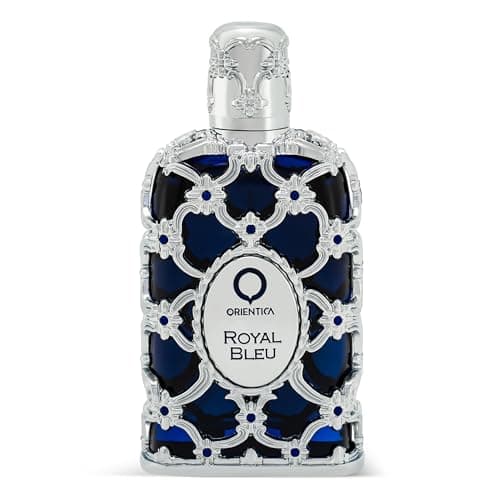
Orientica Royal Bleu — the accuracy pick in the Layton lane
Royal Bleu is the tier-for-tier match to Layton that Detour Noir is not quite. Orientica's own product page gives bergamot, lavender, green apple, mandarin and pepper, then violet, jasmine, geranium and cardamom, over patchouli, sandalwood, guaiac wood, vanilla and musk — that is the reference structure in the reference order, and it is the cleanest single mapping on this page.
The catch is the bottle. It is an 80 ml bottle, not 100 ml, and it sits at a higher price than the Layton-lane alternative above it, which makes the per-milliliter gap far wider than the shelf price suggests. That is the single easiest way to overpay in this whole category, and it is why it ranks fourth rather than first despite being the more accurate bottle.
Skip it if value is the point — the cheaper Layton pick gets you most of the way for much less per spray.
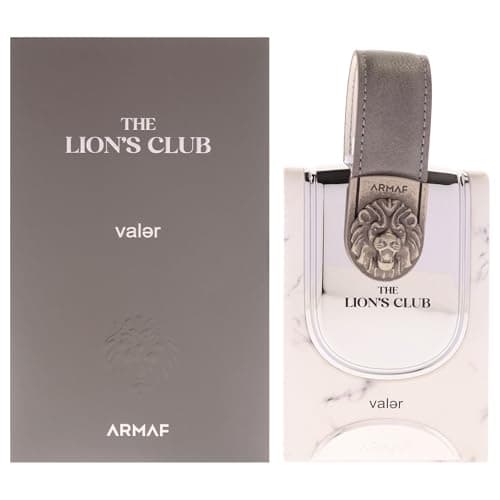
Armaf The Lion's Club Valer — the most accurate Sedley, and the newest bottle here
On paper Valer is the best match on this page to anything: bergamot, grapefruit, mint and mandarin, then rosemary, frankincense, lavender and geranium, over amber, cedar, sandalwood, vetiver, patchouli and cashmeran. Seven notes line up with the reference — bergamot, mint, lavender, geranium, incense, sandalwood and cedar — including the sandalwood and cedar the cheaper Sedley bottle drops, and the frankincense most bottles in this lane quietly skip. Owners who have worn both describe it as creamier and less fizzy than the original rather than thinner, which is an unusually specific kind of praise.
Three things keep it out of the top half. It is a 2025 release, so there is almost no long-term reporting. It is meaningfully more expensive than the other bottle in its own lane. And there is a sourcing problem we have not hit before: Armaf's own product page for Valer publishes a matcha-and-black-tea pyramid that describes some other fragrance entirely — strawberry, milky matcha, black tea, mate — while a neighboring product URL on the same store literally ends in -valer-copyand displays a different product name. It is a duplicated page, not a formula disclosure, and it means this is the first pick on the site where the house's own list was unusable and we had to rely on the database entry instead. We would rather say that plainly than quote a list we do not believe.
Skip it if you want the cheapest route into this accord, or a bottle with a few years of reports behind it.
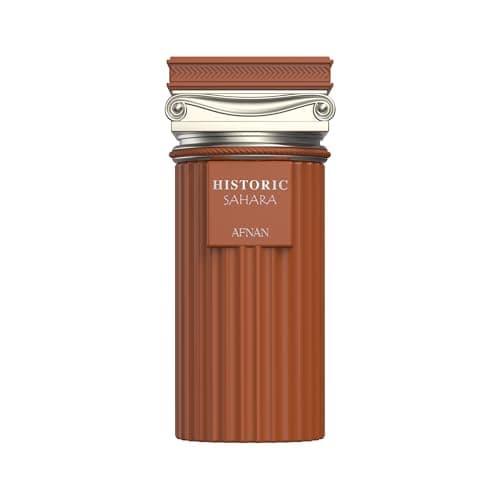
Afnan Historic Sahara — the best of the least settled lane
Historic Sahara chases Althair, and Althair is the newest fragrance this site covers: a 2023 release whose every affordable rival launched in 2024 or 2025. The multi-year owner reporting we normally lean on does not exist for any of them, which is why this bottle — genuinely good, from the longest-established house in that group, at extrait strength and in real stock — finishes last on a page where every other pick has history.
Its published list is cardamom, cinnamon and bergamot, then vanilla, elemi and sugar, over praline, almond, tonka, ambroxan and musk: the spiced-vanilla-praline spine, complete. The gap is orange blossom, which is not in it and which nothing else in the pyramid replaces, so you get the warm half of the accord without the bright lift on top. The added sugar note pushes it sweeter still.
Skip it if the lift was the thing you liked. Our Althair pageranks three more bottles in this lane, including one whose maker reprinted the original's note list word for word.
The Marlys nothing here covers
This is a range with a dozen men's and shared fragrances in it, and this page covers four. The omissions are deliberate and worth stating, because a list that silently skips the hard ones is not being honest with you.
- Delina.The most famous fragrance the house makes, and women's-leaning. This site positions as men's and unisex and its catalog reflects that; covering Delina would be a positioning change rather than a content decision.
- Herod, Greenley, Kalan, Haltane, Percival and the rest.We could not identify three defensible, currently-purchasable bottles from houses that do not put the original's name on the label for any of them. When we can, they get a page. Until then, silence beats a padded list.
- Sedley as a page of its own. Twice researched, twice dropped, for the same reason: two good bottles and no third. Both appear above rather than being stretched into a roundup that would have needed two weak picks to exist.
What we deliberately left off
- Fragrance World "Sedley" and Paris Corner "Sedley Homme". Both ship a product carrying the original's own name. This site does not point readers at houses that do that, because it is a trademark and counterfeit risk and it makes an interpretation impossible to tell from a fake. Our guide to spotting fake cologne covers the tells.
- Lattafa Mayar.Ranked an "80% Sedley clone" by one of the percentage lists. Lattafa's own pyramid is raspberry, litchi and violet leaf, then peony, white rose and jasmine, over musk and vanilla — a women's floral fruity with no mint, no lavender and no geranium in it. Nobody who smelled both wrote that.
- Armaf Club de Nuit Urban Man Elixir.Called "78% similar" to Sedley by the same kind of list. Armaf publishes bergamot, pink pepper, orange blossom and jasmine, then lavender, tagetes, geranium, vetiver, elemi and saffron, over ambroxan, amber, patchouli, cedar and labdanum. The lavender and geranium match; there is no mint anywhere and the base is a saffron amber. It is a good fragrance in the wrong lane.
- "Lattafa Fresh Mint". Named by one guide as the cheapest Sedley clone. It does not appear to exist — repeated catalog searches across two research runs have returned no such product. Treat that guide accordingly.
- Lattafa Khamrah as a Layton dupe and Lattafa Asad as a Pegasus dupe. Both are widely circulated claims, both bottles are in our catalog, and both claims are wrong on the products' own published pyramids — Khamrah shares praline and vanilla with Layton and nothing else, and Asad has no almond, no heliotrope and no lavender at all. We review Khamrah and Asad separately, on their own merits.
- Alexandria Fragrances "Royal Equestrian". The most useful error this project has found: one guide calls it an 85% Pegasus match, others call it a 9/10 Layton dupe. Layton is apple, lavender and praline; Pegasus is almond, heliotrope and cumin. One bottle cannot be a near-match for both, and a list saying it is was not written by anyone who smelled anything.
- The impression and oil houses. Dua, ALT, Oil Perfumery, Alexandria and the numbered-impression sellers all make bottles in these lanes, several of them cheap and in stock. Standing exclusion, same as every other page in this hub.
So which should you buy?
For most people: Al Haramain Detour Noir. It chases the Marly that copies best, its note list tracks, it is the cheapest bottle here and it has the longest record. If you want the more accurate bottle in that same lane and the 80 ml size does not bother you, Orientica Royal Bleu is the upgrade.
If it is the mint-and-lavender fresh one you are after, Lattafa Maahir Legacy is the value answer and Armaf Valer is the accurate one — genuinely a choice, not a ranking. Maison Alhambra Perseus is the pick for the almond accord provided cumin is not a problem for you, and Afnan Historic Sahara is the safest way into the newest lane on the page.
If you would rather see the whole affordable field than one house, our best cologne dupes under $50 page collects every pick on the site, and best cheap colognes covers the bottles worth owning that are not chasing anything at all.
Where every one of these still loses
The copies here are good enough that the interesting question is not whether they smell similar — mostly they do — but where the money went. Three answers recur.
Speed. The originals arrive slowly. A well-made fragrance unfolds over the first twenty minutes, and that unfolding is formulation time, not ingredient cost. The clones tend to present the whole accord at once, which reads as louder and, to some noses, cheaper, even when every material is the same.
The dry-down. Openings are easy. Bitter almond, apple ester, mint and lavender accords are all cheap, stable and unmistakable. The last three hours — a blended layer of sandalwood, musks, rounded vanilla and ambery materials — is where the ingredient budget actually goes, and it is the part every copy on this page simplifies.
Consistency. The affordable houses produce in large batches with more variation between them than the designer houses tolerate. Two bottles of the same clone bought a year apart can differ noticeably; our guide to fragrance batch variation covers what that means in practice and how to tell it from a fake.
Flanker traps: Intense, Noir, Exclusif, Legacy
This range has more of these than any other on the site, and they are expensive mistakes at checkout. The general rule in this segment is that "Intense", "Noir", "Exclusif" and "Legacy" usually mean a new composition rather than a stronger version of the same one.
- Layton Exclusif is a separate parfum-strength composition, not a bigger bottle of Layton. Pegasus Exclusif likewise.
- Al Haramain Detour Noir Intense is not a stronger Detour Noir. It is a cardamom-heliotrope-almond fragrance in a different Marly lane entirely, and it is one of the picks on our Pegasus page rather than a Layton one.
- Lattafa Maahir Legacy is not Lattafa Maahir. The first is the mint-and-lavender fresh bottle above; the second is a saffron-rose-oud amber.
- Armaf Craze Noir is not a darker Craze — owners consistently describe a quieter, muskier fragrance that drops to a skin scent quickly, at a higher price.
Read the full product name, every word of it, before you click buy. In this segment the flankers are not tiers of one fragrance; they are different fragrances sharing a surname.
Buying the original, safely
Unlike some of the houses covered in this hub, Parfums de Marly has real authorized distribution — its own boutiques and website, plus authorized retail partners and a published store locator. A reader who wants the actual bottle can buy one safely, and we would rather say so than pretend the only sane option is a clone.
Every buy link on this page still points at an affordable bottle, which is the standing buyer-first rule across this site: we link the option we can stand behind at the price we can see, not the one that pays most. The originals are also expensive enough to be worth faking, so if you do go for one, our guide to where to buy cologne covers the discounters worth using and the listings worth avoiding.
How to wear them
- Two sprays, three at most. These are dense, ambroxan-heavy fragrances and they carry further than they feel like they do on application. Our guide to how many sprays of cologne works through it properly.
- Match the lane to the weather. The Sedley and Layton picks are spring and summer bottles; the Pegasus and Althair picks are cold-weather ones. Wearing a praline gourmand in August is the single most common way people decide they dislike a fragrance that is actually fine.
- Sample the almond one. Cumin is genuinely polarizing and no amount of reading substitutes for smelling it. If you are new to all of this, sample sets are a cheaper way to find out than a blind bottle.
- Do not layer them. Every fragrance here is already doing three things at once. Our layering guide covers where layering helps, and a full Marly-style accord is not it.
Are Marly clones worth it?
More than almost any other lane in this hub, yes. The economics are unusually favorable: nothing in these accords is expensive or restricted, several of the copying houses are competent, and the price gap is the widest in mainstream fragrance. You are not being asked to accept a bad approximation of something irreplaceable — you are being asked to accept a faster, louder, less-blended version of something that is itself built from modern synthetics.
The caveat is the one that runs through this whole page: buy the bottle with a record, not the bottle with the perfect pyramid. A published note list tells you where a house aimed. Years of consistent owner reports tell you where it landed. Our honest take on whether cologne dupes are worth it works through the wider argument, and fragrance notes explained covers how to read a pyramid without being sold by one.