"Unisex" on a fragrance means the house decided not to narrow its market. It is a marketing category, not a formulation one. There is no material that is chemically masculine, no regulation governing the label, and no difference in how a unisex fragrance is made. The honest practical answer: the gender on a bottle tells you who the brand hopes will buy it, and the note list tells you what you will actually smell like. Read the second and ignore the first.
This is easy to assert and usually asserted without evidence, so the rest of this page is the evidence — taken from houses' own product pages, including several we can show contradicting themselves about a single bottle.
The proof, from one brand's own website
Armaf is the cleanest documented case we have found, and we found it by accident while fetching note pyramids.
The same sentence appears on three unrelated fragrances. "An elegant and feminine fragrance that embodies romantic allure" opens the official product description of Club de Nuit Sillage, of Tres Nuit Man, and of the Club de Nuit Iconic eau de parfum. Three different compositions — a citrus-floral, a green fougere and a citrus-incense — two of them sold as men's fragrances, with the word "Man" printed on one of the bottles. It is a template with a field left unfilled.
And one fragrance gets three different genders.Armaf's eau de parfum pages for Club de Nuit Iconic call the fragrance feminine. The extrait de parfum page for the samefragrance tags it unisex. The Amazon listing says "for Men". The published note pyramid is identical across four separate armaf.com pages. One formula, three genders, depending on which page you land on.
We are not picking on Armaf because it is unusual. We are using it because it is unusually well documented — the contradictions are all on the brand's own domain and can be checked. The practice is industry-wide; most houses are just tidier about it.
Where the gendering actually comes from
If it is not in the chemistry, it has to come from somewhere, and it does: it comes from Western marketing convention established over roughly the last century. A handful of accords got sorted into columns and the columns stuck.
- Sorted masculine: fougere structures (lavender, coumarin, oakmoss), aromatic herbs, citrus over woods, vetiver, leather, tobacco.
- Sorted feminine: white florals, rose, fruit, aldehydes, powdery iris and heliotrope, high sweetness.
- Never successfully sorted: oud, amber, incense, saffron, sandalwood, vanilla — which is to say most of what the Arabian houses make.
That last line is the useful one, and it explains why this question comes up so much more often with the bottles we cover. The Gulf perfume tradition these houses come from never had the Western men's-and-women's split in the first place. Oud, amber, rose and saffron are worn by everybody there, and frequently layered. When those fragrances arrive in a US market organized into two aisles, somebody has to pick an aisle, and the pick is arbitrary.
Our Arabian fragrance houses explained page covers that tradition properly, and fragrance families explained maps the accords themselves without the gender column.
What to look at instead of the label
Four things, in descending order of how much they tell you. This is the what-to-look-for section, and it is the part worth keeping.
First, sweetness. This is the single biggest predictor of whether a fragrance will read as feminine in a Western context, and it is a dial rather than a category. A very sweet gourmand will be read as feminine by a lot of people regardless of what the box says — not because sweetness is feminine, but because the market has trained everyone that way. If that bothers you, the number to watch is sweetness, not the label.
Second, whether there is a dominant floral. A rose or a tuberose in the heart with nothing dry underneath it will read feminine to most noses in the US. The same rose with oud, leather or patchouli under it reads as neither, which is exactly why rose-oud is the most genuinely unisex accord in wide circulation. Our best rose oud fragrances page is the lane.
Third, projection. How much space a fragrance takes up affects how it is perceived far more than its notes do, and it is the axis most people never consider. Projection versus sillage separates the two ideas.
Fourth, and only fourth, the label. It is not zero information — it tells you which aisle the house aimed at, which correlates loosely with sweetness and florals. It is just the weakest of the four signals and the one most people treat as the strongest.
Three bottles where the house itself says unisex
The picks below follow a rule rather than our taste: on each of these three, the house or the listing itself says unisex — we are not nominating bottles we think read unisex.
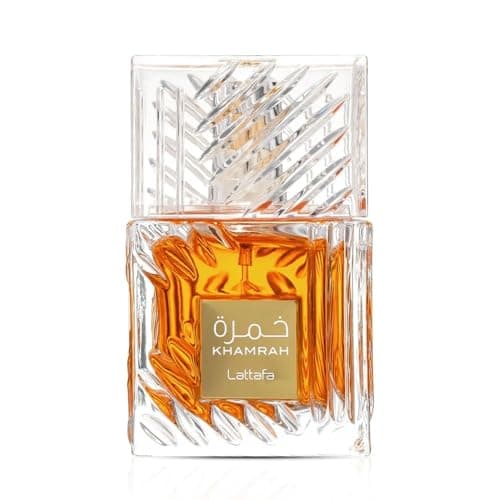
- Lattafa Khamrah— marketed to everybody by the house and worn by everybody in practice; "is Khamrah unisex" is itself one of the most-searched questions about the bottle. A cinnamon-and-date gourmand over vanilla, and the best demonstration on this page that high sweetness does not settle the question.
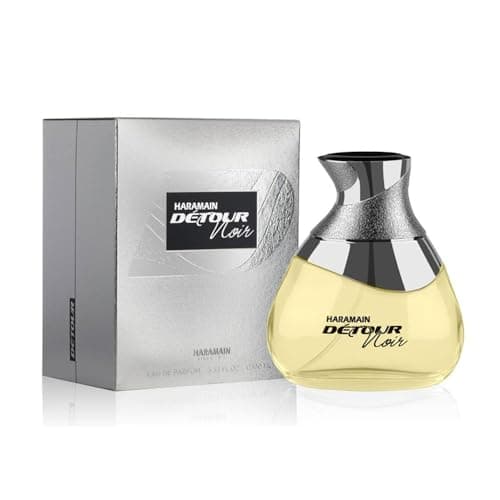
- Al Haramain Detour Noir — Al Haramain lists all five bottles in its Detour line as unisex, which is a house-level decision rather than a per-bottle one. Apple, lavender and violet over vanilla and patchouli: a structure that sits precisely on the line Western marketing draws.
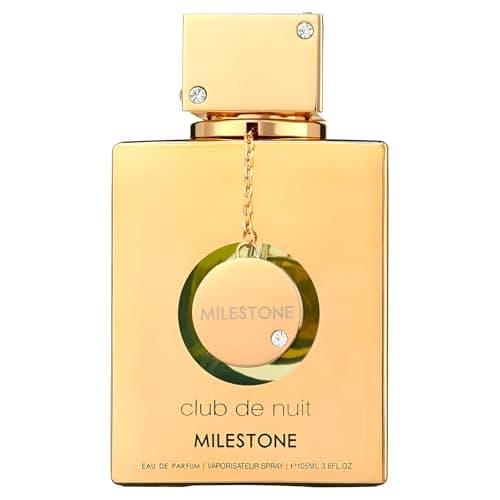
- Armaf Club de Nuit Milestone— its Amazon listing is titled for unisex, inside a range whose other bottles are sold as men's. Salty marine and red fruits over violet and woods.
Notice that they are a gourmand, an aromatic amber and an aquatic. If "unisex" described a smell, those three would have something in common.
Can men wear women's perfume, and the reverse?
Yes, and the question is more common than the answer deserves to be. There is no mechanism by which it could matter: the bottle does not know, the materials are identical, and the only consequence is how other people read the result — which, as established above, is mostly about sweetness and florals rather than about which shelf it came off.
The practical note worth making is that fragrances marketed to women are more often built at higher concentration and higher sweetness, so the usual adjustment is fewer sprays rather than a different bottle. How many sprays of cologne has the arithmetic. And since the overwhelming majority of what we cover is Arabian, this comes up constantly for a structural reason: the Lattafa lineup is full of bottles sold differently in different markets.
The one place the label does matter
Gifting. If you are buying for someone else, the box is what they see, and a person who has spent their life in a two-aisle market may genuinely not want a bottle labeled for the other one — regardless of whether they like the smell. That is a real preference and not a silly one, and it is worth respecting rather than correcting. Our cologne gift guide is built with that in mind.
Everywhere else — buying for yourself, choosing a signature, building a wardrobe — the label is the least informative thing on the bottle. How to choose a cologne is the method we would use instead, and building a fragrance wardrobe is how to think about the second and third bottle.
The accords that are genuinely hard to gender
If you want a fragrance that reads as neither, these are the structures that reliably do it — and they happen to be the backbone of the category we cover.
- Rose with oud or leather under it.The dry, slightly animalic base cancels the floral's sweetness. The most genuinely unisex accord in wide circulation.
- Saffron and amber. Leathery, bitter, warm — it does not map onto either Western column. What is saffron in perfume covers the material.
- Incense and woods. Dry, serious and ungendered by convention because the convention never got around to them.
- Vanilla with something bitter. Vanilla alone reads sweet and therefore feminine to most of the market; vanilla with tobacco, patchouli or coffee does not. What is patchouli in perfume explains the counterweight.
And the structures that will read gendered whatever the label says: a dominant white floral, a high-sweetness fruity gourmand, or a classic lavender-coumarin fougere. Not because of chemistry — because of a century of advertising.
Why fragrance marketing copy is worth so little
The Armaf boilerplate above is a symptom of something broader: product descriptions in this category are frequently written by people with no access to the formula, reused across bottles, and translated more than once. The note pyramid on the same page is usually specific and usually differs per bottle, which is a reasonable signal that it came from somewhere real.
That is the heuristic we use throughout this site: quote the note list, ignore the adjectives. It is also why our methodology page says plainly that we compile published pyramids and aggregated owner reports rather than running a lab, and why we flag it on the page whenever a house contradicts itself.
Layering, which is where the whole idea collapses
In the Gulf tradition these houses come from, layering two or three fragrances is normal practice rather than an advanced technique — and a layered combination has no gender at all, because it is not a product. If you find the whole men's-and-women's framing tiresome, that is the most direct way out of it. How to layer cologne is the practical guide.